
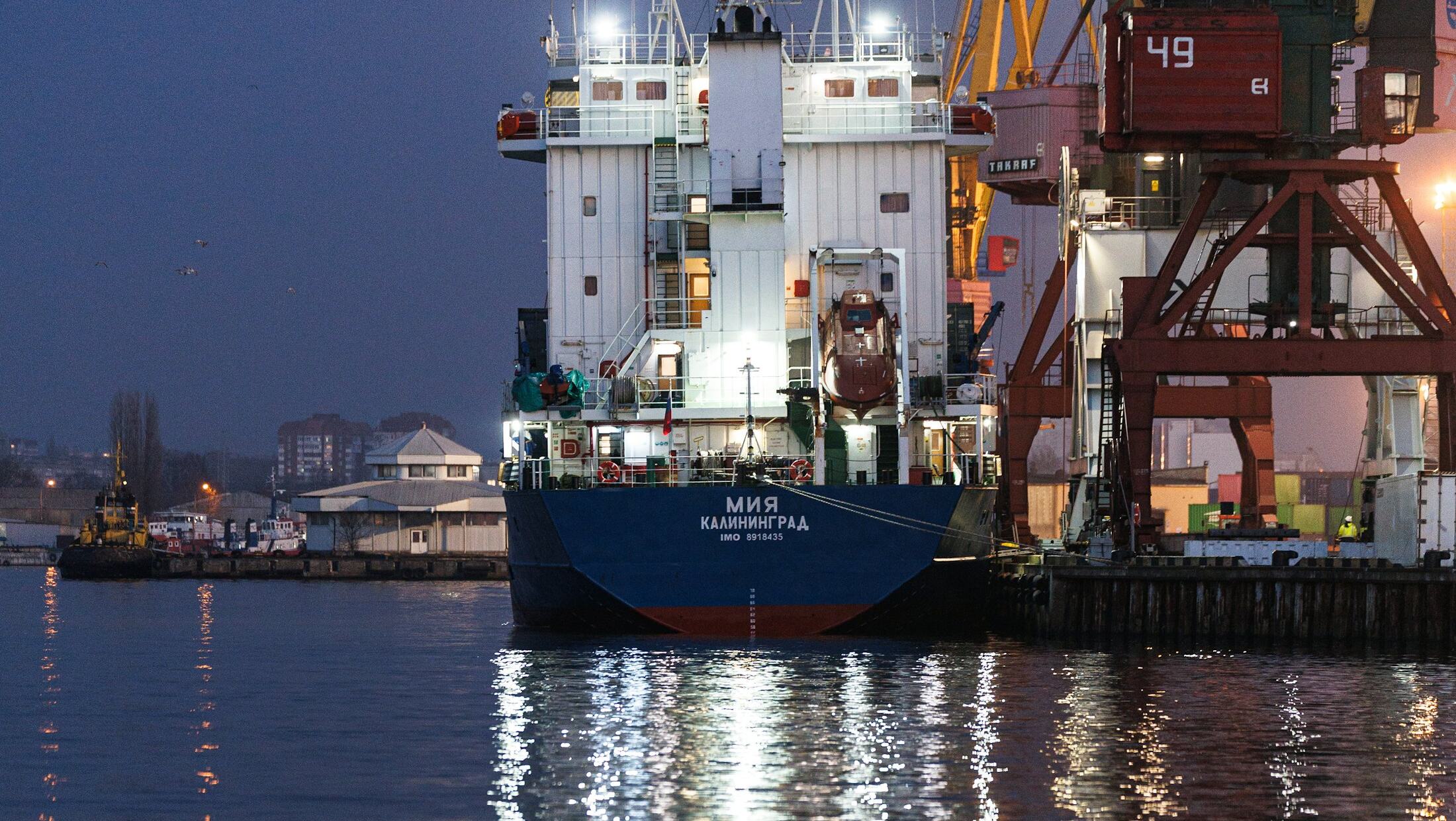


Port logistics — ship agency, clearance and transport

The money you forget becomes money you get back.

A deposit nobody claims. Harbour rent running while you work out who pays. A trip done and never billed on. KARGA FLOW holds the file, the call and the truck — and the money that goes with them, with the proof.

The problem

Three places the money leaves.

None of them is theft. All three are oversights — and an oversight repeats itself on every file.

  • 01

    Deposits that never come home

    A deposit is paid to the line, per container, then forgotten the moment the box moves. It is recoverable, it has a debtor and it has a deadline — and nothing in a spreadsheet remembers any of the three.

  • 02

    A call that costs while you work out who pays

    Harbour rent runs from the actual berthing, not from the day someone opens the file. Launch, chandlery, crew change: every line has a payer, and that is settled before the call, not after.

  • 03

    A trip run, never billed on

    A truck leaves, delivers, comes back. The trip has an agreed fee and a currency; without both at settlement, the run leaves the margin without a trace.

How it holds together

One event. Five modules. Nothing re-entered.

A driver marks the empty returned at the depot, offline, with the interchange receipt photographed. On the next sync:

From the agent’s book

Empty returned

occurredAt ≠ createdAt

  1. → 01Container returned
  2. → 02Deposit becomes recoverable
  3. → 03Detention counter stops
  4. → 04Milestone reaches the customer
  5. → 05The file updates itself

That cascade is why the system is built on events rather than screens. Nobody types the same fact twice.

What it replaces

The competitor is not software. It is a notebook, a spreadsheet and a WhatsApp thread.

All three work — which is exactly why they are still there. What they do not do gets paid for elsewhere.

  • The notebook

    9908/3474/4467

    Three containers, four digits each. Whoever wrote it can read it. Nobody else can, and neither can he in six months.

  • The spreadsheet

    =SUM(D2:D14)

    One row per file, one workbook per month, one version per person. It adds up beautifully; it has never chased anyone.

  • The chat thread

    Has my container come out?Let me check and come back to you.

    Where the customer asks, and where the answer disappears. Two thousand messages, nothing you can act on.

None of the three remembers that a deposit is recoverable, that free time started on Tuesday, or that this receipt belongs to that file. That is exactly — and only — what KARGA FLOW does.

The scope

What is in the box.

Not a roadmap. The first four are the four trades that lose money; the others are what they rest on.

  • Port calls & crew

    The call, the agency mandate, the vessel’s particulars. Harbour rent counted in started days from the actual berthing. Crew changes with visa alerts, and call expenses attached to the call — not to a clearance file.

  • Deposits, demurrage, storage

    Payment, claim, full or partial refund, deduction with a reason, write-off behind an approval. Tiered tariffs per terminal and cargo category; deposits per carrier and box size. Nothing is hard-coded.

  • Transport

    Transporters, trucks, drivers, trips. An agreed fee and its currency at settlement, the interchange that gates the deposit refund, and a dispatch refused when a paper has expired.

  • Invoicing & payments

    Composed from billable costs, PDF, settlements, customer ledger.

And what holds the file togetherShipments & bills of lading · Containers · Expenses · Roles & audit trail

The constraints held

Written for the gate, not the desk.

The queue — real screen

Offline — captured at the gate, sent when the network returns
  • Terminal handlingidem 01f9c4a2380
  • File handling feeidem 01f9c4b7145
  • Haulage — door to dooridem 01f9c4d1920

The queue survives a reload, a closed tab and a flat battery. Every line carries its idempotency key: replayed ten times, it still creates one expense.

Any reference. No format imposed. ICUMS, ASYCUDA/SYDONIA, GUCE, Webb Fontaine — or the number your declarant writes on the corner of a page. The system bounds the length, refuses control characters, and invents no pattern.

It works with no signal
Every write carries an idempotency key and a client-generated id. The queue survives a reload, a closed tab and a flat battery. Nothing is recorded twice.
Field time is not server time
Every event records when it happened, not when it synced. A file that syncs two days late still counts its days correctly.
Two currencies never add up
Port charges arrive in one currency, the invoice goes out in another. No total in the system mixes them. A conversion exists for READING, never for adding, and it always carries the rate, its date and its source. With no rate, the total is not approximated: it is refused, and the missing currency is named.
A missing figure is never a zero
If a number could not be loaded, the screen says so. A zero is a claim, and a zero for want of network reads exactly like a real one.

What we get asked

Six questions, six straight answers.

Do you do clearance, or ship agency?

Both, in one system. Files, bills of lading and containers on one side; port calls, crew, formalities and disbursement accounts on the other. A port-call expense and a file expense do not belong in the same place, and the system knows it.

How does a container deposit come back?

It is recorded per box, at the line’s rate for that size. The refund only opens once the empty is back with its interchange — not before. And writing one off needs approval from someone other than whoever asked.

And at the gate, with no network?

Capture happens offline and is sent when the network returns. What is recorded is the FIELD time, not the typing time — demurrage runs on the first, and that is the one a carrier will hold against you.

Do you convert currencies?

Never inside a total. A total mixing cedis and dollars would assume a rate — the day it was entered, or the day it was paid? Conversion exists for READING, and always carries the rate, its date and its source. With no rate for one currency the total is not approximated: it is refused, and the missing currency is named.

Who sees what?

Every member has a reading scope and a working scope. A file you are not assigned to does not exist for you — it answers “not found”, never “forbidden”, because a polite refusal already tells you it exists.

Can we issue a PDA, then settle it?

Yes. The PDA goes to the owner with its rates frozen at the date of the document. The FDA settles it and carries the variance, line by line — and it is the variance you will be asked to explain, not the total.

Talk to us

One call, one fleet, a whole port.

Tell us what you operate. We answer with what the system already covers, and what would have to be added — plainly.